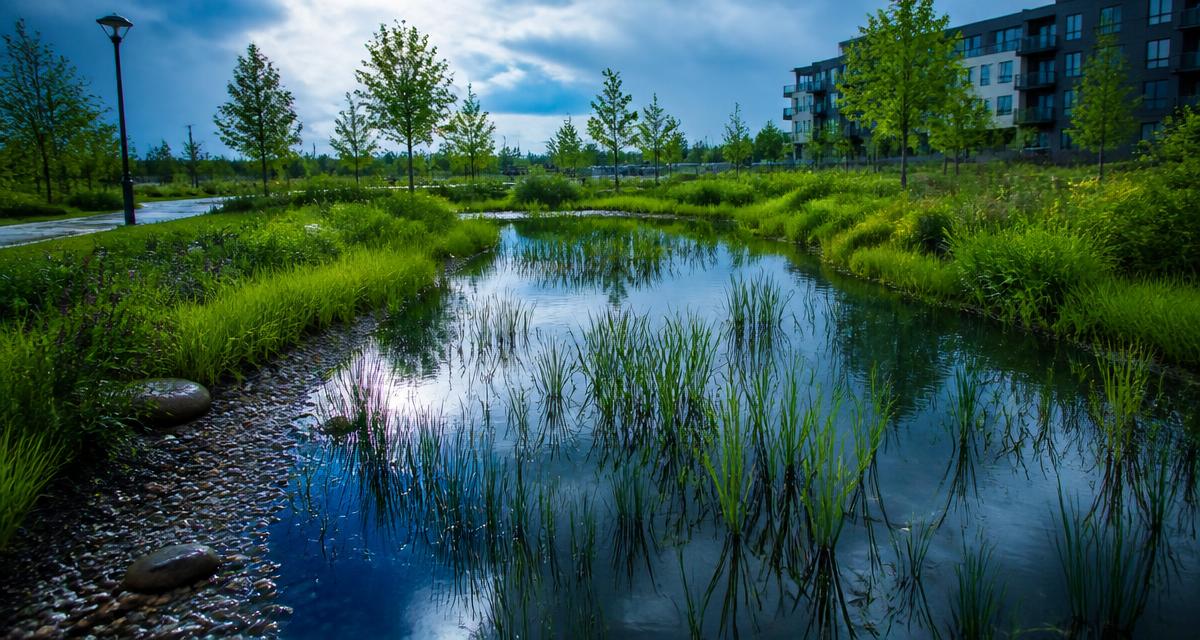
Water retention is the practice of capturing, slowing, and using rainwater where it falls, rather than channelling it away as quickly as possible. On industrial sites it is increasingly important for flood risk management, regulatory compliance, and reducing the burden on municipal drainage.
This article explains the basics of water retention design for industrial and commercial properties, from legal drivers to practical solutions.
Why invest in water retention?
- Reduces peak runoff during heavy rainfall, lowering downstream flood risk.
- Decreases reliance on mains water for irrigation, cleaning, or fire reserves.
- Supports compliance with local stormwater management and water authority requirements.
- Improves site resilience and green credentials.
- Can enhance biodiversity and employee amenities through green spaces.
Green and grey solutions
A good water retention system usually combines green infrastructure (permeable surfaces, swales, green roofs, retention ponds) with grey infrastructure (underground tanks, drainage pipes, pumps, overflow controls). The choice depends on soil, groundwater, available space, and the required retention volume.
Typical design steps
- 01Assess rainfall patterns and existing runoff routes.
- 02Define the required retention volume based on local rules and site risk.
- 03Map soil, groundwater, and contamination constraints.
- 04Select green and/or grey measures and size them.
- 05Integrate the design with roads, buildings, utilities, and landscaping.
- 06Plan operation, monitoring, and maintenance.
When to involve a water or environmental engineer
A water retention system can be designed by a civil engineer, environmental engineer, or water engineer depending on the complexity. If the site is regulated, contaminated, or subject to water authority approval, bring in a water/environmental engineer early to avoid redesign later.