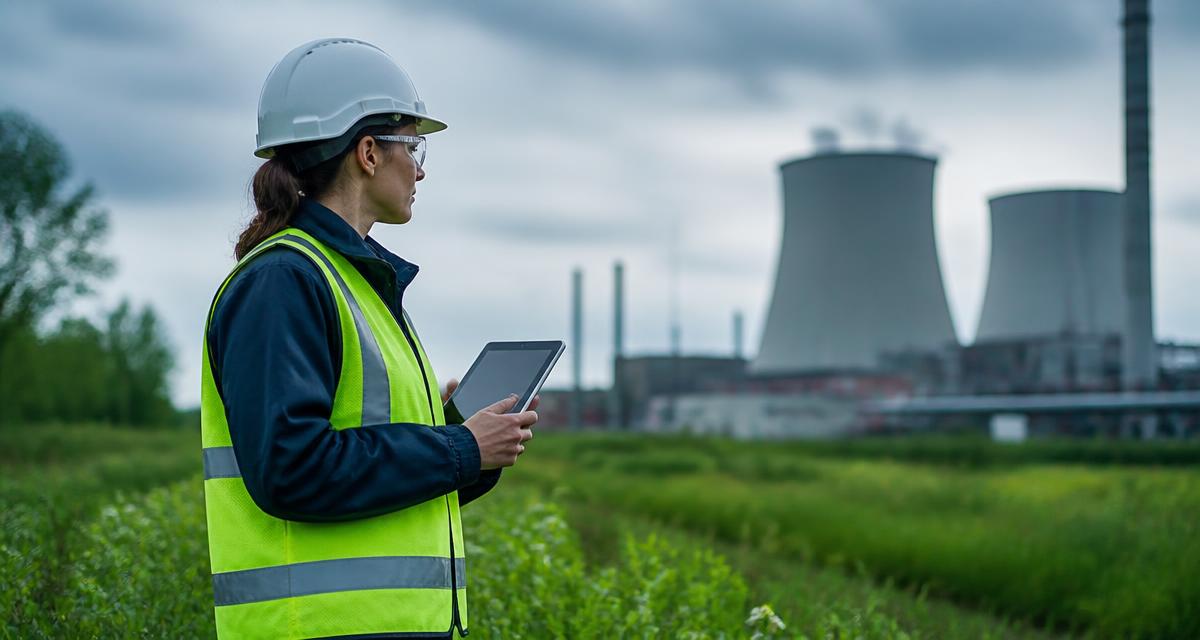
An environmental engineer is the specialist who assesses, documents, and proposes technical solutions for the environmental impacts of an investment or operating facility. In practice, they rarely just write an expert opinion: most often they are the contact point with the authority, compile the permitting documentation, and coordinate environmental aspects between designer, contractor, and operator.
This article summarises the concrete tasks of an environmental engineer, the project stages where it is worth bringing them in, and the criteria for selecting the right expert.
What does an environmental engineer do?
The field is broad and most experts specialise in a few sub-areas. The most common tasks are:
- Compiling permitting documents (environmental permit, integrated environmental permit, air quality and water authority procedures).
- Environmental impact assessment (EIA) and preliminary assessment documentation, or expert contribution to it.
- Waste management: waste management plan, records and reporting, assessment of technological waste streams.
- Air quality protection: point-source records, dispersion modelling, emission calculations.
- Noise and vibration protection: noise assessment, noise map, measurement plans and mitigation proposals.
- Soil and groundwater protection: remediation investigation, monitoring wells, evaluation of sampling programmes.
- Operational support: environmental officer tasks, internal audits, ISO 14001 implementation and maintenance.
- Sustainability and energy efficiency analyses, preparation of emission data reports.
Most environmental risks are not technical but timing risks: missing data or a delayed assessment stops the project, not the technology itself.
When should you involve one?
The most common mistake is bringing in an environmental engineer when the permit application is already due. At that point they can only document what has been built — not change it. You should bring in an expert early in the following situations:
- 01Before selecting a site or plot: protected status, Natura 2000 impact, or water-base protection zones can fundamentally decide whether the investment is feasible at that location.
- 02During the concept and design phase: technological decisions are still cheap to change (emissions, cooling, waste streams, noise source placement).
- 03Before permitting: the preliminary assessment and EIA lead times can be measured in months and must be built into the project schedule.
- 04During construction: construction waste management, noise and dust load, and any unexpected soil contamination.
- 05During operation: reporting, measurement programmes, preparing for authority inspections, notifying expansions or technology changes.
What does an impact assessment process look like?
In Hungary the framework for EIA and integrated environmental permitting is set by Government Decree 314/2005 (XII. 25.). The exact process depends on the project, but the main logic is usually as follows:
| Phase | What happens | Engineer contribution |
|---|---|---|
| Preparation | Collect basic data, site conditions, planned technology | Identifies affected sub-areas and missing data |
| Preliminary assessment | Authority decides whether a full EIA is needed | Compiles documentation and identifies risks |
| EIA | Detailed impact analysis: air, noise, water, soil, biodiversity, landscape | Models, calculates, and proposes mitigation measures |
| Authority procedure | Deficiency resolution, specialist opinions, public hearing | Responds to issues and liaises with the authority |
| Operation | Monitoring and reporting required by the permit | Runs the measurement programme and prepares reports |
How to choose an environmental engineer?
The title 'environmental engineer' alone says little about whether someone is right for your task. Ask about the following:
- Which specific sub-area they work in most: air, noise, waste, water, remediation, or permitting?
- Which industries they have experience in: a food plant, a logistics park, and a waste-handling facility raise very different questions.
- Do they have the required expert qualification if the procedure demands it?
- Do they handle authority liaison and deficiency resolution, or only hand over documents?
- What project size are they used to: a few point-source facilities or large multi-disciplinary projects?
- Can they give you a forward estimate of lead time and required data?
Need an environmental engineer for your project?
The Engineer Portfolio community includes environmental engineers with real project experience in permitting, EIA, waste management, air quality, and monitoring. Brief us on your task and we will recommend the right specialist within 2–5 business days.